
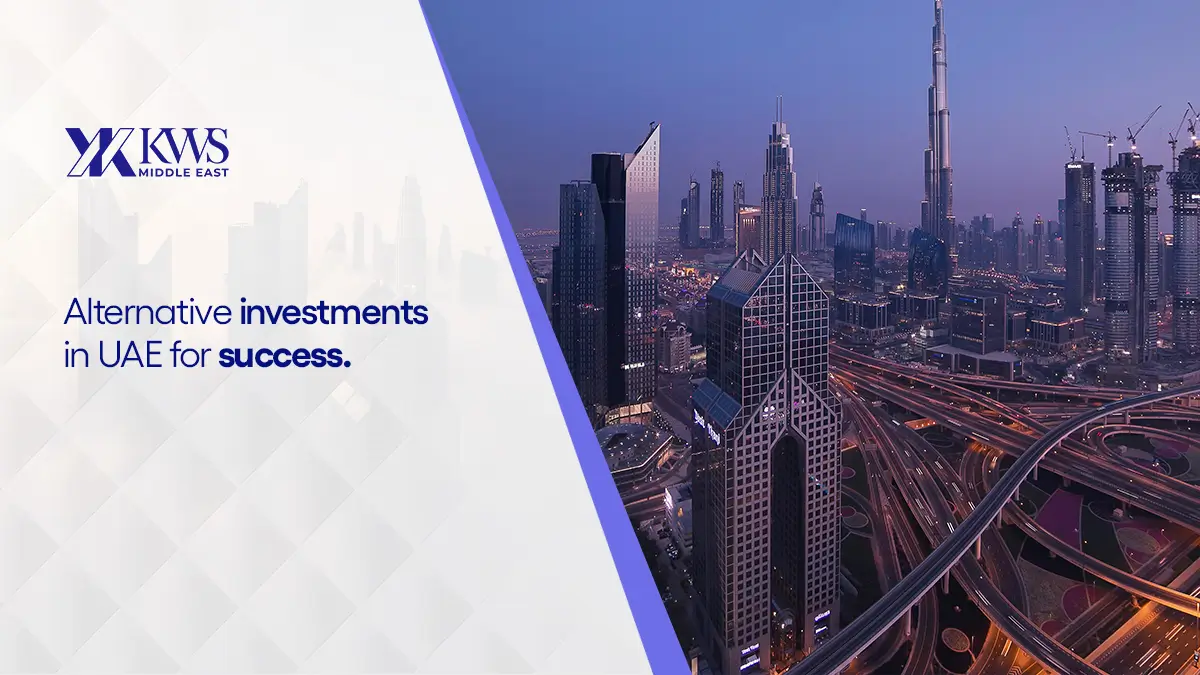
The UAE has built a strong reputation for global investors. Alternative investments in UAE yield great returns thanks to its successful economy. Cities like Abu Dhabi and Dubai attract investors for stable returns, tax-efficient investment and secure opportunities.
United Arab Emirates offers a strong regulatory framework, and business-friendly environment. Many investors are choosing the alternative investment options beyond stocks and bonds due to instability of the market. They want better diversification and continuous protection against the inflation.
The UAE provides a strong platform for alternative investment oppourtunities. Investors are exploring other alternative assets such as private equity, venture capital, real estate, technology startups, and infrastructure projects. Also, they invest in commodities, hedge funds, and digital assets to diversify their portfolios and increase potential returns.
In this post, we are discussing the alternative assets for investment in UAE. Let’s get straight into this.
Why do investors in the UAE choose alternative assets?
The UAE provides stability and access to the global markets. Conventional investments may not withstand volatility issues under structured and growth-oriented conditions. Definite business establishment, extending trade connections and sector related incentives ease effortless expansion and set-ups of investments.
Here are the key reasons driving the interest of global investors in alternative assets across the UAE.
- Faster online company formation and simplification of the licensing process
- Access to Capital Markets & IPOs
- Strong growth in AI, clean energy, healthcare and technology
- Strong capital markets and increasing IPO activity
- Transparent corporate tax framework and improved compliance system
These driving factors help investors to diversify their portfolios, reduce risk and access high-growth sectors. As regulations mature and infrastructure strengthens, alternative investments in the UAE continue to attract both regional and global investors.
What is process of investment in alternative assets in UAE?
This is the step-by-step procedure of alternative investments in the UAE.
- Define investment
- Choose right location
- Setup legal structure
- Acquire regulatory approvals
- Get right support
- Onboard the investors
- Complete banking and tax registration
Now, we briefly look upon this process of investing in alternative assets in the UAE.
Define investment
Start by deciding what type of investment you want to make. This could be private equity, venture capital, real estate or a hedge fund. You should also decide if you are investing alone or bringing in other investors.
Choose right location
Now, choose where you want to invest. DIFC and ADGM are used for funds and financial services. Whereas, mainland UAE is better for property investment, trade and general business activities.
Setup legal structure
Create the legal structure for the investment. Many investors use a separate entity such as an SPV to keep assets separate and make ownership clear.
Acquire regulatory approvals
You need to apply for approvals first that match your setup. This may involve the SCA, DFSA or FSRA depending on where the investment is based.
Get right support
You may need to appoint accredited service providers such as fund manager, custodian or administrator. These professionals help with reporting compliance and day to day operations.
Onboard the investors
Once, you get the right support of service providers, you need to start onboarding investors. At this phase, you need to check the complete compliance protocols and checks like KYC.
Complete banking and tax registration
Now, open a corporate account and complete any needed tax registration requirements. This helps the investment to operate properly from the beginning.
Which are most popular alternative investments in UAE?
Alternative investments in the UAE are growing in 2026, with gold, REITs and fractional real estate. The following section explains what each option offers and why it matters in the UAE market for investors.
- Real estate and property in the UAE
- Gold and commodities in the UAE
- Private Equity and Venture Capital in the UAE
- Digital assets and cryptocurrency in the UAE
- Tangible assets in the UAE
- Hedge Funds and Private Credit
Next, we discuss these leading alternative investments in the UAE.
Real estate and property in the UAE
In the UAE, one of the most popular alternative investments is real estate and property. Residential apartments, villas and commercial properties in major cities such as Dubai and Abu Dhabi are available to be bought by investors. Besides direct ownership, investors may also utilize the market by use of Real Estate Investment Trusts (REITs) and property crowdfunding websites like Stake.
Realty sector investment examples in the UAE
- Villas and residential apartments
- Corporate offices and shops
- Real Estate Investment Trusts (REITs)
- Property crowdfunding services
Why do investors invest in the UAE real estate?
- Easier access to the UAE property market at reduced capital
- Potential to make rental money in prime locations
- Dubai and Abu Dhabi have high property demand
Gold and commodities in the UAE
People use commodities, gold, and other precious metals in the UAE as safe investment during economic uncertainty. Physical gold, oil assets, or agricultural products are commodities that investors usually purchase to ensure that their money is not inflated away. Dubai is said to be a gold trading hub in the world, so that investing in gold is very easy. Numerous investors possess gold to achieve stability in the long-term investment in their portfolio.
Commodity investments examples in the UAE
- Physical gold bars and coins
- Assets associated with oil and energy
- Agricultural commodities
- Priceless metals like platinum and silver
Why do investors invest in the UAE commodity sector?
- Insurance against prices and currency risks
- Dubai is very active in gold markets
- Stable long term store of value
Private Equity and Venture Capital in the UAE
Venture capital (VC) and private equity investments are private companies that are not listed on stock exchanges. These investments tend to concentrate on those industries that are capable of rapid growth like technology, fintech and digital services. UAE’s startup system is quickly expanding over the past few years, with investors around the world seeking innovative firms with high growth potential.
VC and private equity investments examples in the UAE
- Technology startups
- Financial services companies and fintech
- Businesses in healthcare innovation
- Ecommerce and digital media
Why do investors invest in VC and private equity in UAE?
- Availability of startup firms with high potential growth
- High long-term investment returns potential
- Fast-growing UAE technology ecosystem
Digital assets and cryptocurrency in the UAE
Virtual assets refer to cryptocurrencies such as Bitcoin, Ethereum and tokens of decentralized finance. They are blockchain-based assets that introduce new possibilities beyond the conventional financial markets. UAE has emerged as one of the regions that contribute to the innovation of digital assets and the regulation of blockchain and crypto advancement encourages it.
Examples of digital asset investments in the UAE
- Cryptocurrencies like Bitcoin and other alt-coins
- Decentralized finance tokens (DeFi)
- Investment platforms are based on blockchain
- Tokenized digital assets
Why do investors invest in the UAE digital assets?
- Potential high growth in the developing financial markets
- Increased blockchain and crypto usage in UAE
- Investment diversification
Tangible assets in the UAE
Physical properties consist of tangible objects of investment value. They may consist of art, rare wine, luxury watches, vintage cars and collectibles. These assets are not directly tied to financial markets and this is the reason why investors may add them to their portfolios. Their price can be enhanced upon rarity, demand and collector interest.
Examples of tangible asset investments in the UAE
- Pieces of art and paintings
- Exclusive wine and other luxury collectibles
- Antique cars and vintage cars
- Luxury watches and jewelry
Why do investors invest in the UAE tangible assets?
- Special investment opportunities
- Possible increase in value as a unique form
- Stock and financial asset diversification
Hedge Funds and Private Credit
Advanced alternative investment strategies include hedge funds and private credit. Hedge funds make more complicated trading decisions to earn more money and private credit lending directly to non-bank businesses at a lower level. Experienced or accredited investors are usually meant to invest in these investments as they are more risky and complex.
Personal credit and hedge fund investment examples in UAE
- Long term and short term equity strategies
- Lending directly to business organizations
- Distressed debt investments
- Multi‑strategy hedge funds
Why do investors invest in the UAE hedge funds and private credit?
- Availability of qualified investment plans
- High returns than traditional assets
- Direct lending opportunities
Which are regulators for the UAE alternative investments?
The UAE alternative investments are regulated by three governing bodies. Capital Market Authority (CMA), formerly Securities and commodities authority (SCA), regulates the investments in the mainland UAE. Dubai Financial Services Authority (DFSA) supervises the investments in the Dubai International Financial Centre (DIFC). Financial Services Regulatory Authority (FSRA) oversees the investments in the Abu Dhabi Global Market (ADGM).
These bodies defend investors, lowering risks and ensuring funds are not used to breach legal and reporting requirements. Also, they contribute to the establishment of a more systematic and sound investment environment. Here are the main financial regulators in the UAE.
- Capital Market Authority (CMA): It controls investment funds in the mainland of the UAE and monitors licensing, compliance and investor protection.
- Dubai Financial Services Authority (DFSA): It supervises the funds established in DIFC and the promotion of regulated investment forms in financial institutions.
- Financial Services Regulatory Authority (FSRA): It monitors funds established in ADGM and offers the legal infrastructure of fund establishment as well as management.
Comparison of UAE regulators for alternative investments
Here is the differentiation of the UAE financial regulators for alternative assets and other investments.
| Regulator | Jurisdiction | Main Role |
|---|---|---|
| CMA (formerly SCA) | Mainland UAE | Oversees investment funds, licensing, compliance, investor protection |
| DFSA | DIFC | Regulates financial services and investment structures within DIFC |
| FSRA | ADGM | Supervises funds, investment frameworks, and financial services in ADGM |
What are risks and challenges of alternative investments in UAE?
Alternative investment options in the UAE can seem appealing, but have extra cost and a complex framework. This is why one must consider the following challenges before investing in alternative assets.
- Higher costs
- Limited transparency
- More complexity
- Lower liquidity
Taking precautions over these risks can save you from financial repercussions.
Higher costs
Alternative assets may be more riskier than stocks or bonds. They can increase and decrease their value, especially, when the market halts. It might be appealing but has a better chance of losing the money. Always invest when the risk is equal to your objectives and financial opportunities.
Limited transparency
Special investment assets do not necessarily provide information. You might not receive transparent updates and reports in details or access to data on performance with an easy touch. Certain assets are not transparent enough and must be researched upon on your own before investing.
More complexity
Such investments are not as easy to comprehend as conventional options. Certain alternative investments are difficult to understand as some are technical or have complicated rules of operation. When you do not know how an asset performs, it is more difficult to know how to invest in a smart decision. It is more appropriate to learn now and invest later.
Lower liquidity
Certain other investments are difficult to sell. You might have to wait until you can sell, or cancel the investment. It may turn into an issue when you are in a rush and require money.
Final Thoughts
The UAE provides a solid environment for exploring assets, instead of traditional stocks and bonds. There are the several alternative investment opportunities that investors in the UAE are exploring. Because, they want to diversify their portfolios and access high-growth sectors.
United Arab Emirates is a true hub with strong regulations, industry expansion, and access to global markets. Careful planning and expert guidance are essential to manage risks and maximize returns.
Are you ready to explore the potential of the alternative investments in UAE? Professional consultants can help you build a smarter and diverse investment strategy. Connect with experts at KWS Middle East today to get going.


I strongly recommend Khyati and KWS Middle East to anyone seeking reliable, transparent, and well-organized support for company formation in the UAE.
❤️


Her approach was highly professional from start to finish. She dedicated significant time to understanding our business model, explaining each step of the procedure clearly, and ensuring we were fully prepared for every stage of the registration process. Communication was precise, structured, and always proactive.
What truly stood out was the level of support beyond the basic setup — including guidance and preparation for the subsequent phases of opening and operating a branch in the Emirates. This gave us clarity, confidence, and strategic direction moving forward.
I strongly recommend Khyati and KWS Middle East to anyone seeking reliable, transparent, and well-organized support for company formation in the UAE.




He supported us end-to-end — trade license, approvals, location selection, restaurant space finalization, fit-out coordination, and all legal and regulatory work. Setting up a fully fledged restaurant in Dubai is not easy, but Mr. Hasan made the entire process smooth, structured, and stress-free.
What we truly appreciated was his deep knowledge of local regulations, proactive approach, and constant follow-up until everything was completed properly. He always gave honest advice and ensured there were no delays or hidden issues.
Highly recommended for anyone planning to set up a restaurant or any business in Dubai. A reliable consultant who genuinely takes care of his clients.


FAQs about the alternative investments in UAE
These are the answers to the common questions regarding the alternative investment assets in the UAE.
What are alternative investments in the UAE?
The alternative investments include assets outside regular stocks and bonds. For example, real estate, private equity, gold, hedge funds, and cryptocurrencies.
Why do foreigners invest in alternative assets in the UAE?
Foreigners invest in the alternative assets to diversify their investment portfolios. They are exploring these new growth areas to reduce reliance on the traditional markets. Therefore, they can avail unique long term opportunities with potential high returns in the UAE.
Can beginners invest in alternative assets in the UAE?
Yes! Beginners can invest in all alternative assets in the UAE. However, simpler options like gold or REITs are easier to understand than the hedge funds.
Are alternative asset investments risky in the UAE?
The government, regulators, and financial companies do their best to safeguard the alternative investments in the UAE. However, alternative assets are riskier in the UAE than traditional investments. As they are complex, less liquid, more volatile, and harder to manage.
Author Bio